Hour 15:41
29 Jan 26
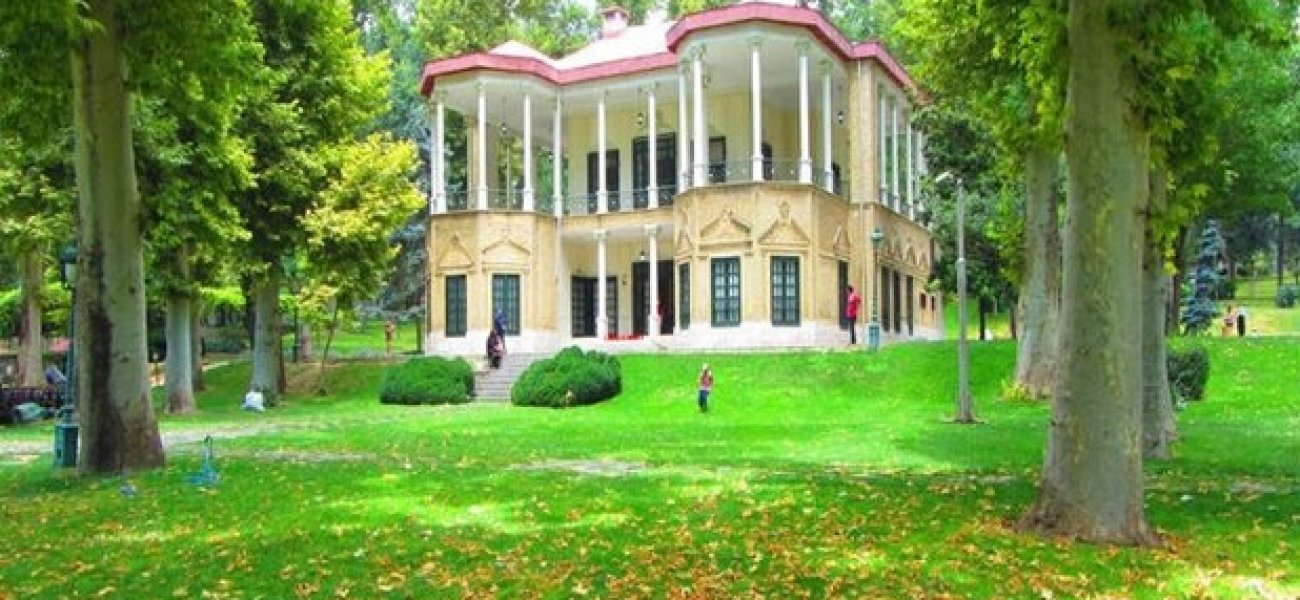
In the Niavaran Cultural and Historical Complex, there stands an old building known as the Ahmad Shahi Pavilion—though no one is truly certain about the accuracy of attributing it to Ahmad Shah Qajar. Even those who make such claims immediately add that it is not at all clear whether Ahmad Shah ever built this mansion or even resided in it. What is certain and well documented, however, is that during the reign of Mohammad Reza Shah Pahlavi, this place was used as the residence of his son and crown prince, Reza.
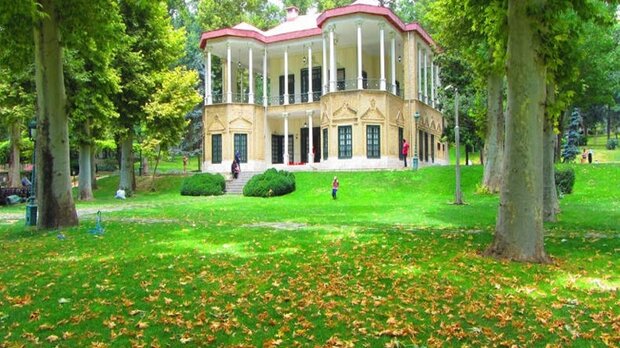
Caption: The current southern façade of the Ahmad Shahi Pavilion
The Ahmad Shahi Pavilion is a cube-shaped, two-story building with polygonal projections on the southern side and three entrances located on its southern, northern, and eastern façades. It is situated north of the garden and the Sahebqaraniyeh Palace.
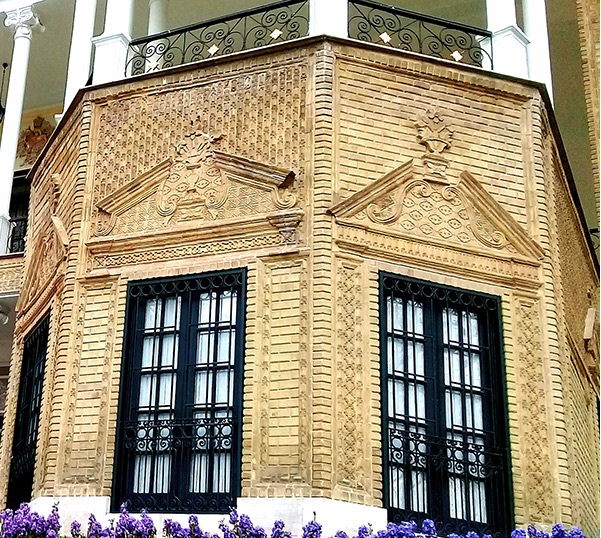
Caption: The brickwork details of the Ahmad Shahi Pavilion
The precise location of the pavilion corresponds to the grounds that are believed to have once been the site of the great garden and the royal harem and private quarters of Naser al-Din Shah Qajar. We know that in this northern garden, about forty separate houses—each with at least three rooms—were built for the shah’s wives. In front of these houses stood one that was larger than the rest and featured a large veranda. This latter house was referred to as the “royal chamber” of the complex, where the shah, as the only man permitted in the harem, would be present. Any other man’s entrance into this compound was strictly forbidden and punishable with severe consequences.
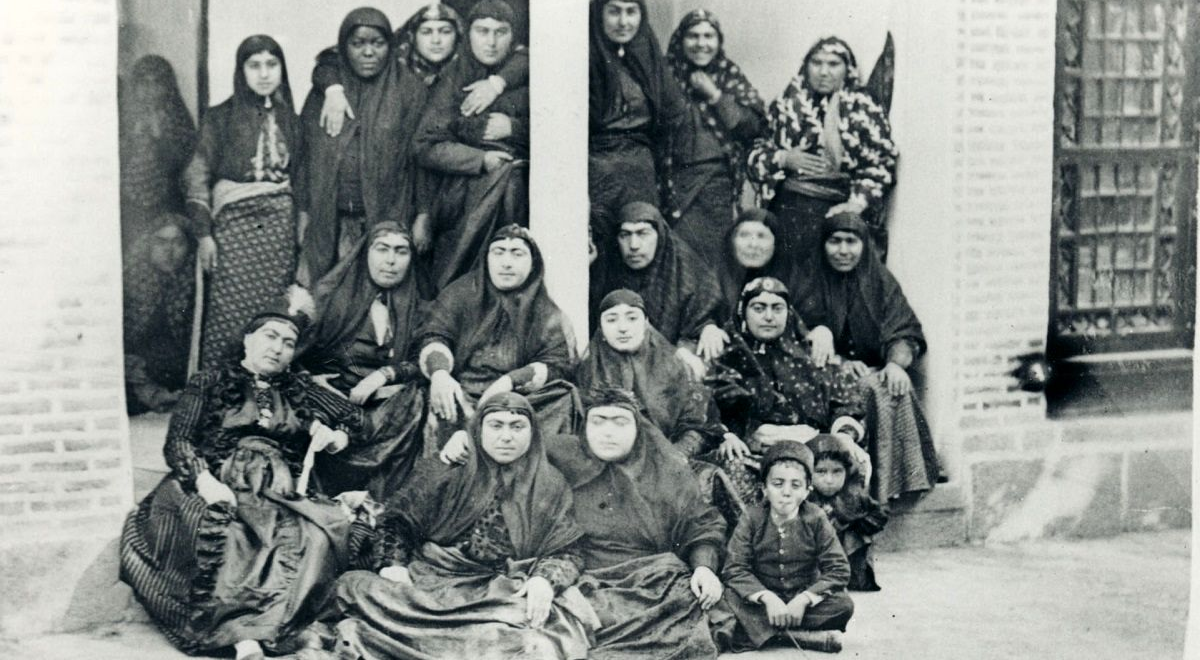
Caption: A photograph of women of the harem taken inside the andaruni (inner quarters)
Certain architectural similarities between the Ahmad Shahi Pavilion and the buildings from the reign of Naser al-Din Shah, or even earlier periods of the Qajar dynasty—during Fath-Ali Shah and Mohammad Shah—have led to the speculation that this pavilion might in fact be the same modest structure from Fath-Ali Shah’s era, later expanded during Mohammad Shah’s reign. Originally used as a temporary seat of the monarch, it gradually grew in significance during the reign of Naser al-Din Shah, eventually serving as his harem chamber and sleeping quarters within the inner compound.
Fath-Ali Shah was fond of hunting sparrows in the Niavaran garden. Whenever he came to this garden, he would stay in a modest structure. He had appointed his eldest son, Abbas Mirza, as crown prince. But fate was unkind to this brave, intelligent, and capable prince; Abbas Mirza died at the age of 44 in 1249 AH (1833 CE), before his father’s passing. Out of affection for Abbas Mirza, the shah appointed his son, Mohammad Mirza, as crown prince. Not long after this announcement, however, Fath-Ali Shah passed away, and thus his grandson, Mohammad Mirza, ascended the throne at the age of 28 with the royal title of Mohammad Shah Qajar.
His minister, Qa’em Maqam Farahani (the second of this name), decided to take the young king to the Niavaran summer residence, away from the intrigues of the late shah’s courtiers, lest they poison him or corrupt his mind. Thus, the modest building of Fath-Ali Shah in Niavaran, still standing at the time, became the centre for shaping Mohammad Shah’s new monarchy and Qa’em Maqam Farahani’s fresh government.
As the shah settled in Niavaran, captivated by its climate and enchanting beauty, he ordered the modest Fath-Ali Shah structure to be expanded. According to contemporary historians, this building acquired a small upper chamber and two Janbins (flanking rooms on either side of the main hall). Niavaran became the place that shaped Mohammad Shah’s most cherished memories: from the events that led to his unexpected accession to the throne, his father’s premature death, the removal of sixty rivals to succession (who were all more competent that him), to hosting part of the wedding ceremonies of his son and heir, Naser al-Din Mirza (later Naser al-Din Shah), in the Niavaran summer residence because of the summer heat in Tehran.
His wife, Malek Jahan Khanom—later titled Mahd-e Olya as the mother of the crown prince—also had a summer residence in the village of Niavaran. This ensured that whenever the shah traveled, he would visit her there first upon departure and again upon return. Could this pavilion be the very same mansion of Mohammad Shah? Could it be that Naser al-Din Shah, whose wedding was celebrated here, later built this residence as his permanent retreat with his harem, recalling that moment of his youth? We do not know.
Furthermore, we know that the residence of Anis al-Dowleh stood on one side of the inner garden, while that of Amine Aqdas (known as Amin Aqdas) was located on the other. The other wives’ residences lay between those of these two favoured consorts. To prevent the usual jealousies among royal wives, two walls were built beside the homes of these two favourites, separating them from the others. Could this pavilion have been one of these residences? Whatever the truth, its construction cannot be linked to the time of Ahmad Shah.
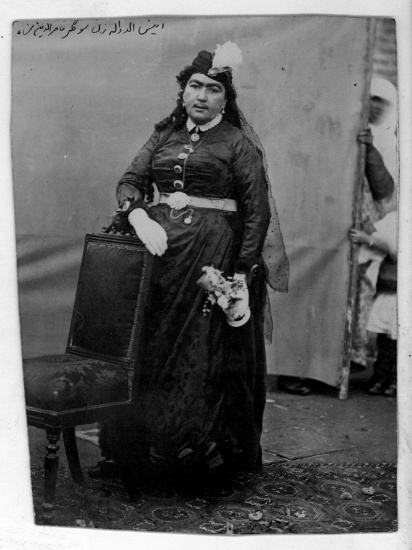
Caption: Anis al-Dowleh, one of Naser al-Din Shah’s favourite wives
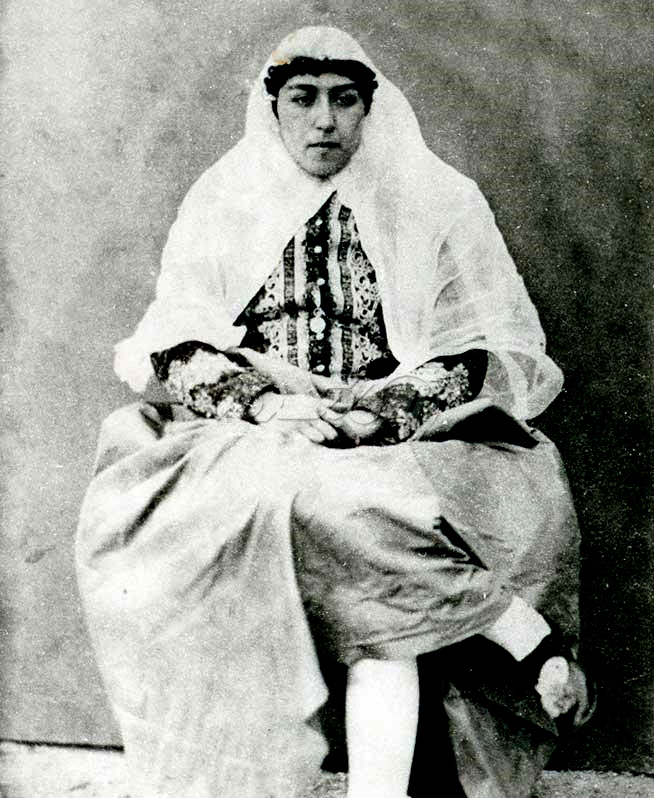
Caption: Amin Aqdas, another favourite wife of Naser al-Din Shah
After the Pahlavi dynasty came to power, significant changes were repeatedly made in the Niavaran royal complex. Many of the old buildings were demolished, while some of those that remained were renovated and given new functions. During the reign of Mohammad Reza Shah, the pavilion in question was converted into the sleeping quarters of his crown prince.
It is said that because of a pool located in the central hall of the ground floor, and the flow of water through that space, moisture had caused damage to the building. As a result, the pool was removed and the water channel blocked. The small fountain now found in the central hall of the first floor is a symbolic reconstruction of that old pool.
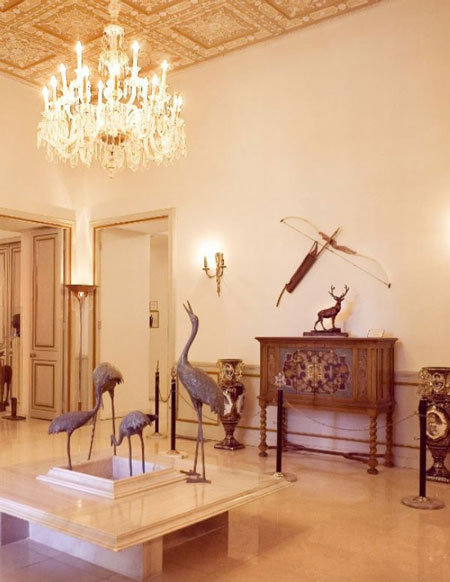
Caption: The small fountain in the central hall of the Ahmad Shahi Pavilion, built as a symbolic representation of the old pool
Today, when you step inside the pavilion, what stands out most are the personal belongings of the late shah’s son: from storybooks and educational tools to school report cards, a personal television set, and musical instruments.
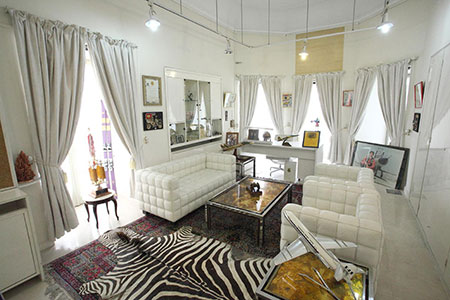
Caption: One of the rooms inside the Ahmad Shahi Pavilion
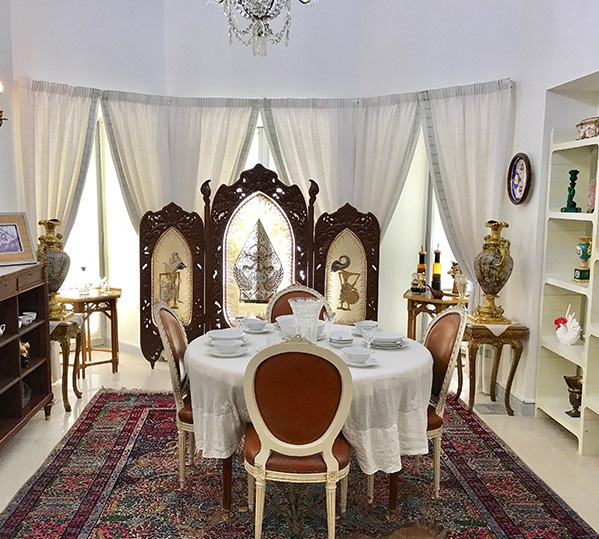
Caption: Dining room of the Ahmad Shahi Pavilion
It is called the Ahmad Shahi Pavilion, though, as mentioned, there are no reliable evidence in possession confirming its attribution to Ahmad Shah Qajar. The building still stands firm and upright, bearing little trace of the passage of time upon its façade. Perhaps in the future, with further study of the structure itself and deeper research into historical documents, scholars will be able to lift the veil from its obscure past. And perhaps what remains unknown to us today will one day be known to future generations.