Hour 13:57
03 Oct 26
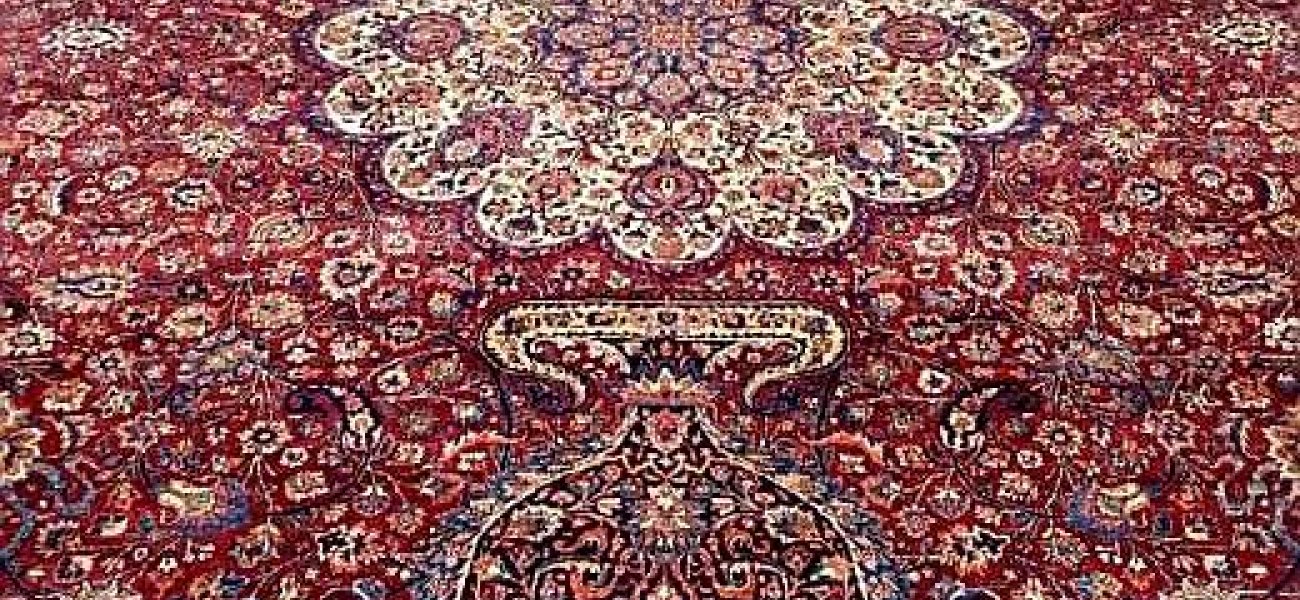
Among the valuable collections adorning the main Niavaran Palace are outstanding examples of authentic Persian carpets.
One of the most exceptional among them is a carpet produced by the Amu Oghli workshop of Mashhad, renowned as one of the finest weaving ateliers in the history of Iranian carpet production.
Technical Specifications
Place of Weaving: Amu Oghli Workshop, Mashhad
Weaving Technique: Turkish (symmetrical) knot
Warp: Cotton
Weft: Cotton
Pile: Wool
Design: Afshan (Vase and Arabesque motifs)
Knot Density: 120 raj
Field Color: Lac red
Border Color: Navy blue
Dimensions: 2.73 × 3.72 m
Historical Background
From the mid-13th century AH (late 19th century CE) onward, Mashhad became a major center of carpet production. Among the most distinguished masters of this period were Amu Oghli, Makhmalbaf, and Haj Ali Khamenei—figures who played a fundamental role in reviving and elevating the art of carpet weaving in Mashhad.
The founder of the Amu Oghli workshop was Mohammad Kohanmouyi, originally from Azerbaijan. A textile merchant and manufacturer, he moved to Mashhad between 1250 and 1270 AH (Solar Hijri calendar), changed his surname to Amu Oghli, and devoted himself to carpet production.
He had two sons, Abdol-Mohammad and Ali Khan, both of whom continued the family tradition and produced carpets that are today considered among the most valuable examples preserved in museums and collections inside and outside Iran.
Master Abdol-Mohammad Amu Oghli, together with his brother Ali Khan, established numerous weaving workshops in Mashhad and surrounding villages, significantly contributing to the refinement and prestige of Persian carpet art. He was particularly skilled in designing unique patterns, harmonizing colors, and selecting high-quality materials. Among his innovations was the production of carpets noted for their exceptional softness and lightness, comparable to fine textiles. His mastery of traditional dyeing techniques set him apart from his contemporaries.
The knot density of Amu Oghli carpets ranged from 40 to 150 raj per approximately 6.5 centimeters, and many examples feature continuous kilim-woven end finishes integrated into the carpet structure.
His final major works were two monumental carpets of approximately 140 square meters each, currently preserved at Marble Palace and Sa'dabad Complex.
Masterpieces of Amu Oghli
In 1935, a monumental carpet measuring 628 × 407 cm was woven for the Officers’ Club, based on the design of the celebrated Ardabil Carpet. This extraordinary piece contains approximately one million knots per square meter.
Between 1934 and 1936, he produced the renowned “Hunting Ground” carpet, considered among his most exquisite and valuable works. Another masterpiece, known as the “Kouzeh Konani” (Linen Vase) carpet, designed by Abdol-Hamid Sanatkar, was executed in a delicate miniature style of remarkable refinement.
Among other notable productions is a vase-design carpet inspired by a fragment preserved at the Museum of Art and Industry in Vienna, Austria, later incorporated into the collection of the Iran Carpet Company.
Many of Amu Oghli’s commissions were undertaken with the support of the Astan Quds Razavi endowment. His works were commissioned for the Shrine of Imam Reza in Mashhad, the Samarra Shrine, the Iranian Parliament, and the Officers’ Club.
The carpets of the Amu Oghli workshop stand today as masterpieces of Persian textile art—distinguished by technical excellence, harmonious design, and enduring historical significance.