An Artwork from the Saqqakhaneh School at Jahan-Nama Museum
Hour 13:16
03 Oct 26
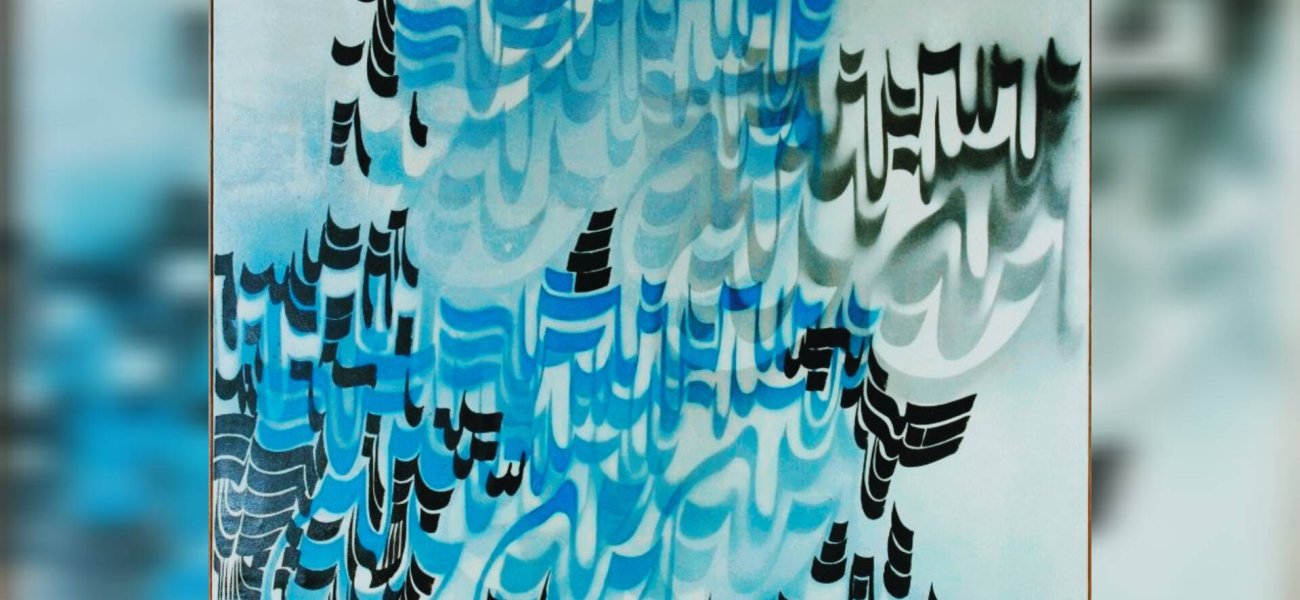
The emergence of calligraphy in painting in the early 1960s evoked for some viewers the atmosphere of traditional ...saqqakhaneh shrines, leading to the adoption of the term “Saqqakhaneh.” The term was later broadened to describe
The emergence of calligraphy in painting in the early 1960s evoked for some viewers the atmosphere of traditional saqqakhaneh shrines, leading to the adoption of the term “Saqqakhaneh.” The term was later broadened to describe the works of artists—both painters and sculptors—who drew upon traditional forms of Iranian art as a point of departure and raw material in their practice, not solely those working with Persian script.Faramarz Pilaram (1937–1983) was an Iranian painter and calligrapher and one of the prominent representatives of the Saqqakhaneh School. He was among the first artists to explore the formal qualities and visual potential of script—whether written text or traditional calligraphy—within the context of modern Iranian painting.Pilaram was a prolific artist with a strong visual sensibility and remarkable technical skill. In his early works, he employed stamping techniques to create inscription-like backgrounds for simple geometric forms or religious symbols such as the alam (standard) and the open hand motif. Later, he turned increasingly toward calligraphy—particularly Nasta‘liq and Shekasteh Nasta‘liq scripts—and experimented extensively with the traditional model of siah-mashq (dense calligraphic practice sheets).These explorations included diverse geometric compositions combined with calligraphic textures, calligraphic drawings, colored siah-mashq works, and rhythmic arrangements of raised and interwoven letters. These characteristics are evident in the untitled work by Pilaram currently on display at the Jahan-Nama Museum.This untitled painting was created in Paris in 1972 (1351 AH/SH) and is executed in oil on canvas. The composition demonstrates a dynamic rhythm generated through the interplay of words and calligraphic lines.