Hour 10:39
17 Feb 26
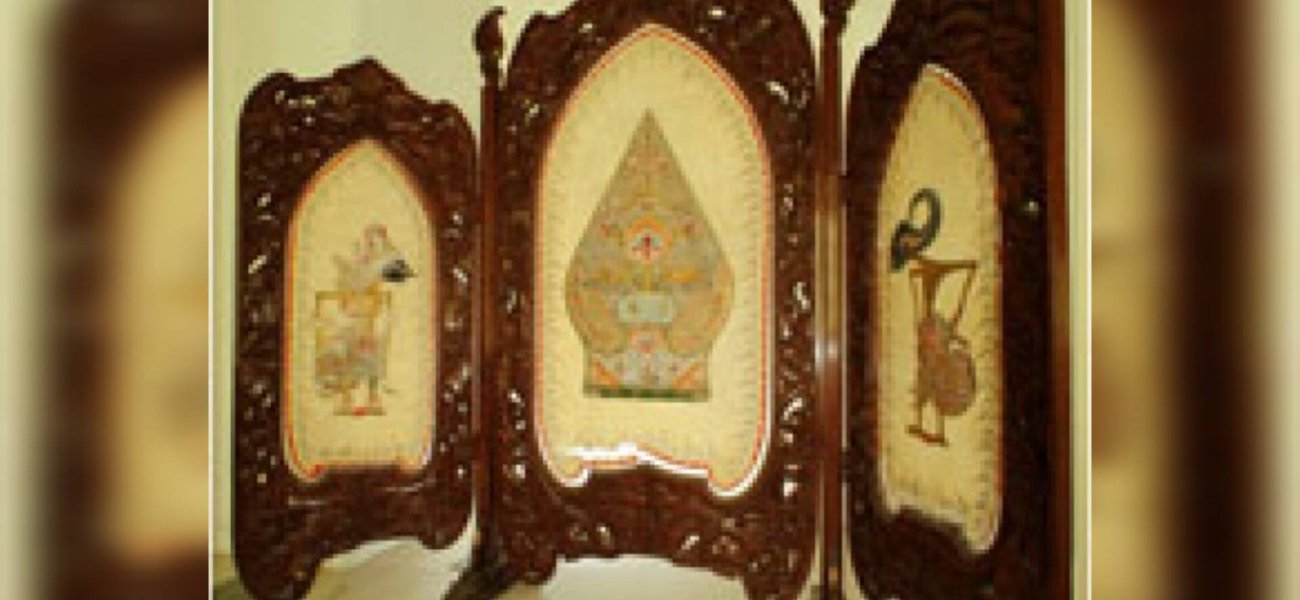
An important decorative artwork preserved at the Ahmad Shahi Pavilion within the Niavaran Cultural-Historical Complex is an Indonesian screen (paravan), presented to the Pahlavi Court during the presidency of Suharto (1966–1999).
An important decorative artwork preserved at the Ahmad Shahi Pavilion within the Niavaran Cultural-Historical Complex is an Indonesian screen (paravan), presented to the Pahlavi Court during the presidency of Suharto (1966–1999).
The screen was most likely produced in Java, where the creation of such works is widespread, particularly in the islands of Java and Bali. It is constructed from mahogany or pine wood, and its intricate motifs are executed on treated cowhide, reflecting traditional Indonesian craftsmanship.
At the center of the screen appears the image of a mountain, which in Hindu philosophy symbolizes serenity, spiritual elevation, and a sacred site of worship. The forest and animals within the mountain represent the material world and the realm of living beings. The figures depicted on either side of the screen are drawn from the Hindu epic Mahabharata:
On the right: Arjuna, the heroic warrior of the Bhagavad Gita and a member of the Pandava lineage.
On the left: Krishna, regarded as a divine incarnation and the spiritual guide of Arjuna.
The Bhagavad Gita, the most renowned philosophical section of the Mahabharata, recounts the dialogue between Krishna and Arjuna on the eve of the great battle of Kurukshetra. In this discourse, Krishna expounds teachings on the nature of the self, the soul, the divine, and the three paths to spiritual liberation: knowledge (Jnana Yoga), action (Karma Yoga), and devotion (Bhakti Yoga).
The Mahabharata, one of the longest and most significant epic works in world literature, is not only a heroic narrative but also a profound compendium of ethical, philosophical, and social teachings that has shaped Indian civilization for centuries.