Hour 11:22
09 Feb 26
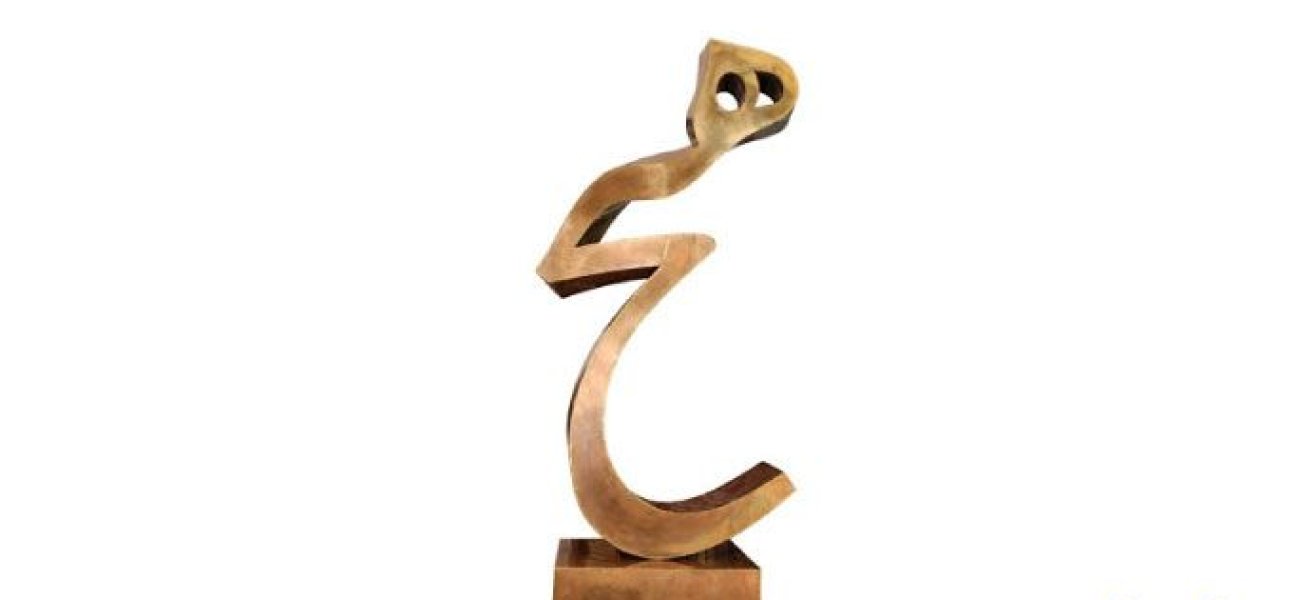
The sculptural work titled “Heech” by Iranian contemporary artist Parviz Tanavoli is on display at the Royal Library Museum of the Niavaran Cultural-Historical Complex.
The sculptural work titled “Heech” by Iranian contemporary artist Parviz Tanavoli is on display at the Royal Library Museum of the Niavaran Cultural-Historical Complex.
Parviz Tanavoli was born in Tehran in 1937. He began his artistic activity in his teenage years. After completing a three-year course in sculpture at the Tehran School of Fine Arts, he traveled to Italy in 1956 and enrolled at the Academy of Fine Arts in the city of Carrara. He returned to Iran in 1957, then went to Milan in the same year, and in 1959 received his diploma from the Brera Academy.
Tanavoli’s sculptures have a fundamental distinction from those of other artists. Sculpture is essentially reliant on its outward architecture; however, in his works Tanavoli places emphasis on the inner space and internal form of the sculpture—a mysterious inner space that influences the external shape. Tanavoli’s “Heech,” the result of more than four decades of experience and thought by this great artist, is the most famous and most popular series among his works. Over these decades, numerous versions of “Heech” have been created by him and acquired by major museums and collectors in Iran and around the world.
Tanavoli was praised from the very beginning of his career. From early on, as his work was rooted in Iranian literature and folk culture, he was able to find a unique language for his art—a language that gradually became more mature and richer and, over the decades, came to be recognized in the art world as part of Iran’s rich culture. Tanavoli’s “Heech” sculptures were initially created in pursuit of a mystical and poetic idea and gradually came to life again and again through various materials and forms. Some of the “Heech” figures were placed in cages, giving rise to the “Heech in Cages” series. Some became intertwined with chairs, and others became freer and more modern. Small and large bronze “Heech” sculptures, colorful fiberglass “Heech” works, and more.
Regarding the realization of his “Heech” idea, he says: “During certain periods of my work, I created only ‘Heech’ and did nothing else. The beginning of making ‘Heech’ was accompanied by a protest-oriented perspective, because I was dissatisfied with the environment of that time. Galleries were offering secondhand Western goods and exhibiting the works of artists who took pride in displaying Western art—fifty years later. At the same time, some people were calligraphers who, ignoring the presence of calligraphy and its history in the homes of each and every one of us Iranians, brought it onto large canvases and claimed it was painting. All of these issues came together for me and led me, in those years, to a clear intellectual protest. Ultimately, I thought of choosing a single word and showing its beauty. In a way, I wanted to create dimension in contrast to those lines and present a three-dimensional work so that this sculpture could replace the works of that era.
“I had just returned from Italy. I was dissatisfied and felt that I had brought that culture back with me, while I did not want to be a second-rate Italian who had returned to his own country. Iran’s rich culture was embedded in poetry, but poetry had no dimension, and I was interested in introducing sculpture into this culture. Thus, various factors led to the choice of the word ‘Heech’ in those years, and all of them became reasons for this word to enter my life.”